Weekly Advanced Technologies〔103〕
Based on the weekly diary of technology provided by the daily list of the NCSTI online service platform, we launch the column "Weekly Advanced Technologies" at the hotlist of sci-tech innovation. Today, let's check out No.103.
1. Xiaomi Releases Robot Foundation Model Xiaomi-Robotics-1
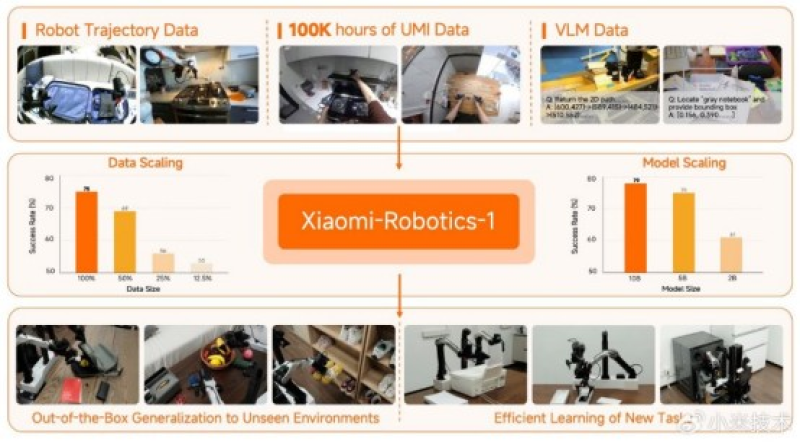
On July 16, Xiaomi launched its foundation model in the embodied intelligence domain, the Xiaomi-Robotics-1. The model can be directly applied to real-world scenarios after robot deployment, understanding and executing natural language instructions without the need for model training from scratch.
According to the introduction, the model's pre-training phase utilized 100,000 hours of real-world manipulation trajectory data, covering scenarios such as homes, offices, restaurants, outdoor environments, and industrial settings. This includes over 1,700 types of scenarios, 2.4 million interaction segments, and more than 260 different tasks. The team built an automated annotation pipeline capable of completing high-quality annotation of the entire dataset within two weeks. In terms of training strategy, the team first established general action generation capabilities through pre-training, and then used tens of thousands of hours of cross-embodiment data for post-training alignment, adapting to different types of robots such as mobile manipulation and dual-arm robots. For complex and delicate new tasks, only a small amount of data is required for fine-tuning.
The model ranks highly in the RoboDojo simulation evaluation, and has achieved a certain level of average success rate and scene generalization capability in benchmarks such as RoboCasa and VLABench.
2. Academician Deng’s Team Launches Intelligent Cellular Chemical Reprogramming and Clone Screening Platform
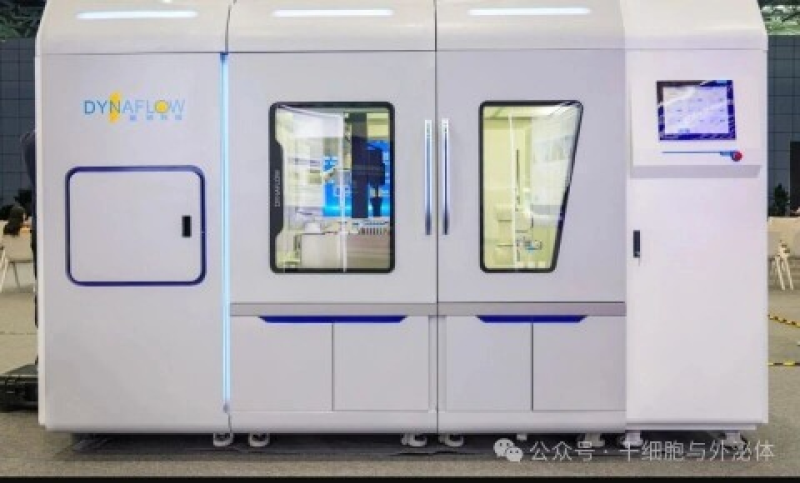
On July 14, at the 2026 Autonomous Laboratory Conference held alongside the Zhongguancun Forum, a team led by Academician Deng Hongkui of the Chinese Academy of Sciences, in collaboration with Beijing Daina Laboratory Technology, unveiled an intelligent cellular chemical reprogramming and clone screening platform. This platform achieves fully automated production from human peripheral blood to iPS cells.
iPS cells (induced pluripotent stem cells) are generated through reprogramming technology, which reverts ordinary somatic cells back to a stem cell state with differentiation potential. These cells can then be directed to develop into functional cells such as pancreatic islet cells, neural cells, and immune cells for the treatment of various diseases. Deng Hongkui’s team had previously overcome the core technology for preparing pancreatic islet cells from iPS cells. In related clinical studies on type 1 diabetes, patients who received transplants have regained the ability to autonomously regulate blood glucose, with stable therapeutic effects lasting nearly three years.
The newly released fully automated platform integrates biotechnology, AI-powered intelligent screening, and automated equipment, achieving a closed-loop operation across the entire process—from material supply and chemical reprogramming to quality inspection and final output.
3. Chinese Academy of Sciences Develops Perovskite-Organic Tandem Solar Cell with Stable Photoelectric Conversion Efficiency of 28.04%
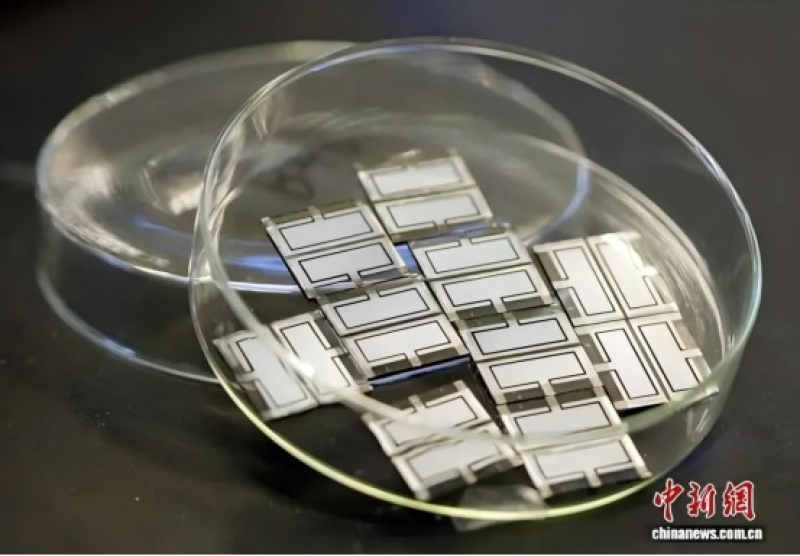
Recently, a research team led by Academician Li Yongfang and Researcher Meng Lei from the Institute of Chemistry, Chinese Academy of Sciences, developed a perovskite-organic tandem solar cell with a steady-state photoelectric conversion efficiency of 28.04%. The relevant results were published in the journal Nature.
Tandem cells vertically stack two types of cells with different characteristics to absorb sunlight in different wavelength bands. Their efficiency ceiling is higher than that of traditional single-junction cells, and they can be made into thin, lightweight, and flexible forms, making them suitable for applications such as building-integrated photovoltaics, wearable devices, drones, and space power supply. Previously, the core problem with this type of cell was that wide-bandgap perovskite materials are prone to compositional segregation under light exposure, leading to performance degradation. To address this challenge, the team proposed a "full-stage regulation" approach by introducing a TDB additive molecule: during the film formation stage, it promotes uniform distribution of material components; during the light operation stage, it automatically transforms into a new molecule with stronger adhesion, thereby suppressing phase separation throughout the entire process from preparation to use.
Test results show that the cell can retain 90% of its initial efficiency after 625 hours of continuous light exposure, achieving a simultaneous improvement in both efficiency and stability.
4. Approaching AI Achieves 3x Improvement in AI Token Production Efficiency in Half a Year
Approaching AI's self-developed ATaaS production service platform has made significant progress in AI Token production efficiency. According to information released on July 13, since the Spring Festival this year, the Token production efficiency per unit of computing power has increased by 3 times, total production capacity has grown by more than 30 times, a factory with a daily trillion-level Token production capacity has been put into operation, and some business segments have achieved profitability.
Founded in Beijing in 2024, Approaching AI's core team comes from the High Performance Computing Institute of the Department of Computer Science at Tsinghua University. Academician Zheng Weimin of the Chinese Academy of Engineering serves as the Chief Scientific Advisor, and Professor Wu Yongwei of Tsinghua University serves as the Chief Scientist. The company adopts a "Token as a Service" model, focusing on the large-scale production of high-quality AI Tokens.
5. SUGON Launches China's First Fully Domestic 100,000-Card AI Supercluster
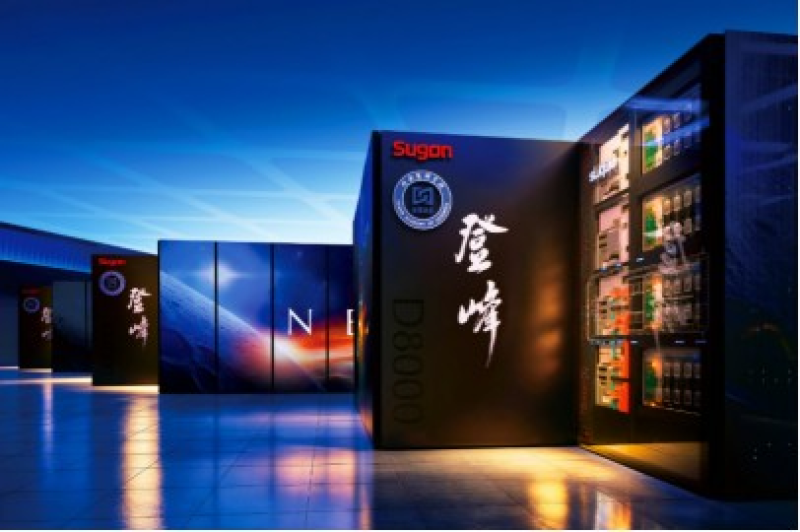
On July 10, at the 2026 Intelligent Computing Application Conference of the Photosynthetic Organization, Sugon Information Industry Co., Ltd. (Sugon) announced that its fully domestic 100,000-card AI supercluster, the Sugon 8000 (Dengfeng), has been officially completed and put into operation, and has been simultaneously connected to the National Supercomputing Internet. The cluster achieves full self-control and autonomy from chips, servers, storage, and networking to cooling systems. It adopts a "supercomputing-intelligence fusion" technology roadmap, supports full-precision computing, and can simultaneously cover scenarios such as large model training, AI inference, scientific research, and industrial simulation.
According to the introduction, the core nodes of the cluster have completed over 300 application optimizations, covering more than 20 fields including large models, robotics, innovative drugs, new materials, and quantum computing. Among them, over 70 applications can be stably scaled to the 10,000-card level. Scientific research tasks such as protein folding simulation and trillion-atom molecular dynamics have been verified. Sugon has also simultaneously initiated the development and construction of a second 100,000-card computing power system.