China's Long March legacy endures from trek to tech
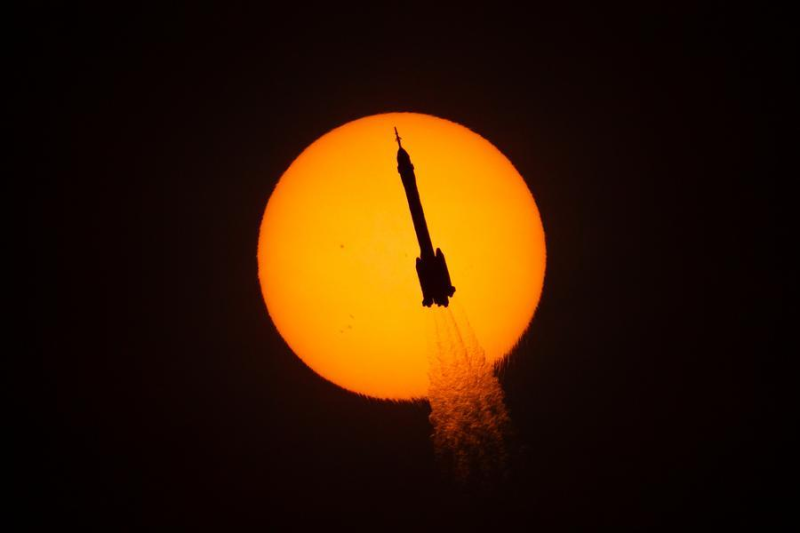
A Long March 2F Y22 rocket carrying the Shenzhou XXII spaceship blasts off from the Jiuquan Satellite Launch Center in Northwest China, Nov 25, 2025. (Photo/Xinhua)
One of the most visible legacies of the Red Army's Long March, a roughly 12,500-km military odyssey that ended 90 years ago, may well be an active rocket family that bears the same name.
Among the world's busiest launch vehicles, China's Long March rockets have for more than half a century carried satellites, crewed spacecraft and scientific probes into orbit and beyond, helping open the country's path to space.
This name for the rocket was suggested by several pioneers of China's aerospace industry. "It meant that the development of the rockets would overcome all difficulties and achieve victory, just as the Red Army had done during the Long March," said Han Houjian, a general designer of the Long March 1 rocket, which made its maiden flight in 1970.
On April 24, 1970, the Long March 1 lifted off carrying Dongfanghong 1, China's first satellite, into orbit. Since then, this rocket family has grown into a diverse fleet of launch vehicles with increasing payload capabilities. As of October 10, 2026, it had completed 671 orbital launches.
The journey behind these Chinese rockets echoes that of the Red Army: both were marked by immense hardships, determined perseverance, and the resolve to press ahead against the odds.