Beijing E-Town companies showcase advances in China's semiconductor industry at ICCAD-Expo 2026
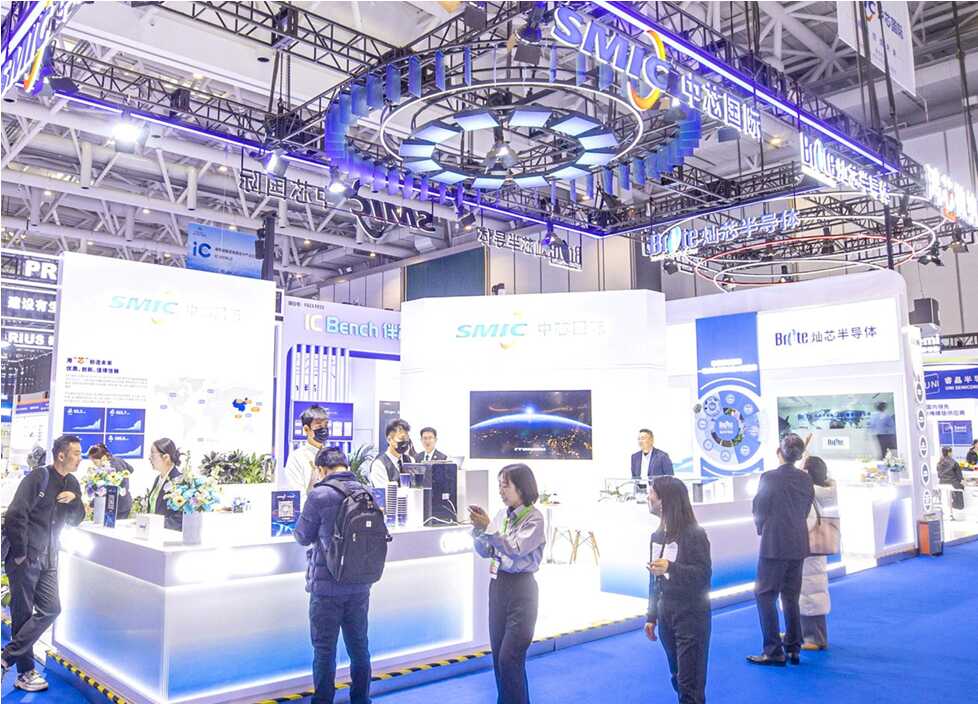
Photo/Convergence Media Center of Beijing E-Town
More than 20 companies from the Beijing Economic-Technological Development Area (BDA), also known as Beijing E-Town, presented their latest technologies and solutions at ICCAD-Expo 2026, highlighting advances across the integrated circuit (IC) value chain, from chip design tools and custom chip development to testing and verification.
The 2026 Integrated Circuit Development Forum (Beijing) and 32nd Integrated Circuit Design Exhibition (ICCAD-Expo 2026) brought together companies working on AI application-specific integrated circuits (ASICs), electronic design automation (EDA), semiconductor intellectual property (IP) and testing services. Their exhibits illustrated how the local industry is building capabilities to support chip development, manufacturing and commercialization.
IC design is a central stage in the semiconductor value chain, shaping a chip's performance, power consumption, and time to market. Microelectronics (Beijing) Co., Ltd. presented an AI ASIC customization platform, an integrated supply-chain solution, and next-generation optical interconnect technologies.
The company's offerings cover the process from defining chip specifications and ASIC design to 2.5D and 3D packaging design, delivery, and support for volume production. They are designed to meet demand for customized chips in AI computing and dedicated enterprise applications, while addressing long development cycles and coordination challenges across cloud, edge, and device-level computing environments.
Wang Hongpeng, chairman of Joinsilicon Microelectronics, said the solutions are intended to help computing equipment manufacturers and developers of industry-specific intelligent devices bring products to market more quickly.
The Beijing E-Town-based company, recognized nationally as a specialized and innovation-driven small and medium-sized enterprise, has developed its own enterprise-level chip design technology platform and AI ASIC design platform. Both have passed science and technology achievement evaluations organized by national government departments and were assessed as reaching internationally advanced levels, according to the company. It also contributed to five national standards in the Chiplet Interconnect Interface Specification series, which have entered into force and provide a basis for interoperability between chiplets in China.
Upstream of chip design, two key areas are semiconductor IP and EDA software. IP refers to pre-designed, reusable building blocks, such as CPU cores and high-speed interface modules, that chip developers can purchase and integrate into their designs. Reusing these components reduces duplicated work and shortens development cycles. EDA software provides the tools needed throughout the design process, from logic design and simulation to verification and physical layout and routing.
Innosilicon focused on high-performance chips for computing, memory, and connectivity. Its exhibits included LPDDR6 and LPDDR5X technologies, DDR5 memory interface IP, high-speed automotive interfaces, 5G base-station interfaces, PCIe 5.0 switches, and clock-data recovery (CDR) signal retiming solutions. Its DDR5 memory interface IP, for example, can be used in server and AI computing systems to support fast, stable data access during large AI model training.
Empyrean Technology, a domestic EDA software provider, presented an advanced packaging EDA platform, an automotive-grade EDA toolchain and AI-enabled design solutions. Several of its tools are already being used by chip design companies and automotive semiconductor projects in China. The products are intended to address gaps in the domestic supply of full-flow analog EDA tools and advanced packaging design software.
The company has established an industrial software research institute in Beijing E-Town. It plans to work with local chip designers, manufacturers and shared technology platforms on tool adaptation and the integration of AI into EDA, with the aim of accelerating the testing, refinement and wider adoption of domestically developed tools.
Beijing Tangoic Software Technology Co., Ltd. showcased its independently developed logic synthesis software, industrial-grade placement and routing tools for advanced process nodes, and formal verification tools. It also introduced Jevto, an AI engineering assistant for chip development. Running locally through a command-line interface, Jevto uses natural language to connect engineering files, scripts, and EDA tools. It assists with tasks including script writing, troubleshooting, report analysis and parameter optimization.
Chip development also depends on reliable testing, analysis, and verification. At the exhibition, staff from Mige Lab explained failure-analysis procedures to representatives of a chip design company. Established in Beijing E-Town in 2023, the laboratory provides integrated semiconductor testing and certification services, including electron microscopy, materials analysis, micro- and nanofabrication, failure analysis, SEMI standards certification, and back-end testing for optoelectronic chips.
Mige Lab has also been involved in developing Beijing E-Town's shared IC testing and verification platform, bringing testing services closer to companies within the industrial cluster. This allows businesses to access testing and validation locally rather than sending samples to facilities elsewhere and waiting for service, helping shorten R&D cycles.
Zhu Zhen, general manager of Mige Lab, said the laboratory had served more than 100 companies in Beijing E-Town since its establishment, including chip manufacturers, semiconductor equipment and component suppliers, and optoelectronics businesses. Its next priorities include expanding capabilities in semiconductor manufacturing processes, advanced packaging, silicon photonics, high-reliability devices and parts-per-trillion-level compositional analysis. The laboratory also plans to improve its networked shared-service system.
Beyond individual technologies, Beijing E-Town is developing infrastructure and services to support collaboration across the semiconductor industry. At the exhibition, the Tongming Lake IC WORLD Integrated Circuit Design Community presented its industrial focus, facilities and service offering, drawing interest from companies across the sector.
The community is targeting several areas, including high-performance computing chips and RISC-V, automotive-grade and industrial chips, semiconductor IP and EDA, Chiplet technology, silicon photonics and optoelectronics. Its development strategy combines dedicated industrial space, shared technology platforms, integrated business services, links to application scenarios and policy support. The aim is to help companies access the resources and partners they need at different stages of development.
ICCAD-Expo 2026 is one of China's largest annual events for the IC design industry, bringing together companies from across the semiconductor value chain. The exhibition covered approximately 20,000 square meters and attracted around 400 companies and institutions, including Arm China, Synopsys, BYD Semiconductor, and Tongfu Microelectronics. Exhibitors represented areas ranging from IC design, EDA and IP to wafer manufacturing, packaging and testing, semiconductor equipment and materials, and downstream applications.
Yang Yang, a technical engineer at DAMO Academy (Shanghai) Technology Co., Ltd., said discussions with specialists and other industry participants offered opportunities to exchange technical insights and gain a closer understanding of the semiconductor ecosystem in Beijing E-Town.
Yang highlighted the company's XuanTie C950 high-performance RISC-V processor. The chip has a maximum clock speed of 3.2 GHz and achieved a single-core SPECint2006 score of more than 70 for the first time, setting a performance record for RISC-V processors globally, according to the company.
From EDA tools and customized chip development to testing, verification and industry collaboration, the exhibits at ICCAD-Expo 2026 reflected the expanding capabilities of China's semiconductor sector in Beijing E-Town. As domestically developed technologies move from demonstration to wider industrial use, the area's growing network of companies, platforms and technical services is helping connect chip innovation with real-world applications.